

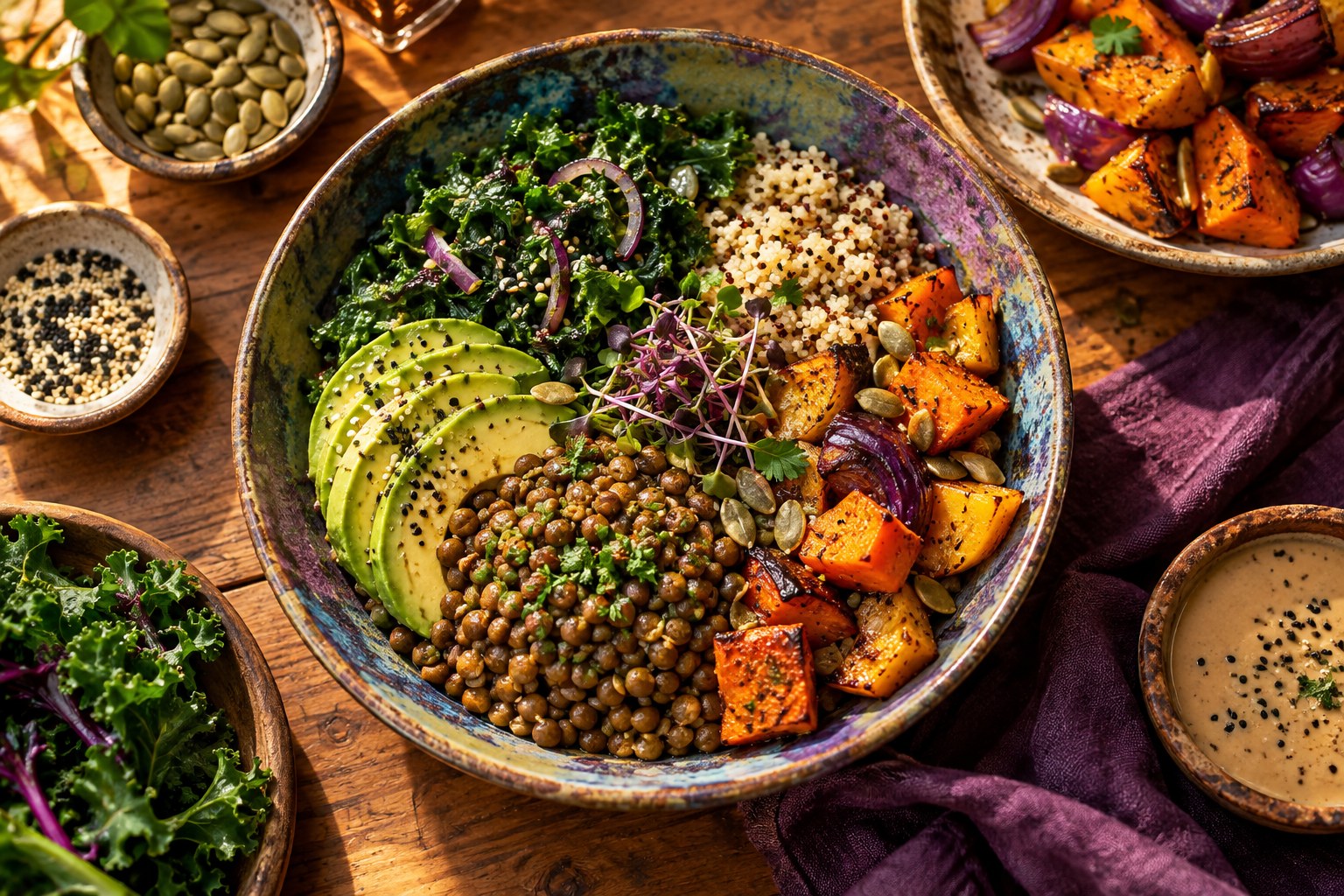
Nutrition is easier to discuss when advice connects to real meals, available foods and individual needs. A dramatic claim about one ingredient rarely explains the wider pattern of someone’s diet.
You can begin by learning how to assess information and make practical choices that fit your circumstances.
Look at the Overall Pattern
WHO describes adequacy, balance, moderation and diversity as core principles of a healthy diet. It also notes that individual needs and cultural context influence its composition.[1]
That is a broader approach than labeling every food “good” or “bad.” Ask what you regularly eat, what variety is available and which practical barriers you face.
An ordinary meal does not need an expensive “superfood” to deserve attention.
Build a Meal-Planning Example
As a general planning exercise, list foods you enjoy in a few categories: vegetables or fruit, grains or other staples, and protein-containing foods such as beans or lentils.
Choose a combination that fits your preferences and needs. For a plant-based example, you could explore lentils, a familiar grain and vegetables prepared in a way you enjoy.
This is an illustration, not a personalized meal prescription. Allergies, medical conditions and other individual circumstances may require qualified advice.
Make Planning Fit Your Budget
Compare convenience, cost and the time required to prepare food. Frozen or canned ingredients may be practical options; read the label and consider how you will use them.
Write a short shopping list around meals you intend to make. Before buying something unfamiliar, decide when and how you will prepare it.
A plan that creates waste or ignores your schedule may need simplifying.
Examine Nutrition Claims
Ask what a claim actually promises. “Contains a nutrient” and “treats a condition” are different statements.
Look for reliable guidance and evidence relevant to the exact claim. Personal testimonials, spiritual explanations and product advertising should not be treated as interchangeable with clinical evidence.
Be cautious about content that encourages fear of broad food groups without context or presents a supplement as a replacement for appropriate care.
Your Next Learning Step
Choose one nutrition question and find a reliable source that addresses it. Compare the explanation with an online claim you have encountered.
On Kemetic App, you can explore plant-based learning while keeping evidence and personal preference distinct. Use community conversations to exchange preparation ideas, not to diagnose another person or prescribe what they should eat.
Continue Learning
Explore the Holistic Wellbeing learning collection for related teachings. For a deeper learning option, review Embarking on a Plant-Based Journey: Transitioning to a Vegan Lifestyle Course and its curriculum.
You can also read The Power of Going Plant-Based: Mind, Body, and Soul.
For optional practical reading, review the How to Become Plant-Based: Step-by-Step Guide product details. Assess dietary information against reliable guidance and your individual needs.
Sources and Further Reading
These links support the factual context or offer further study. The reflection exercises and examples in this article are original educational suggestions.