

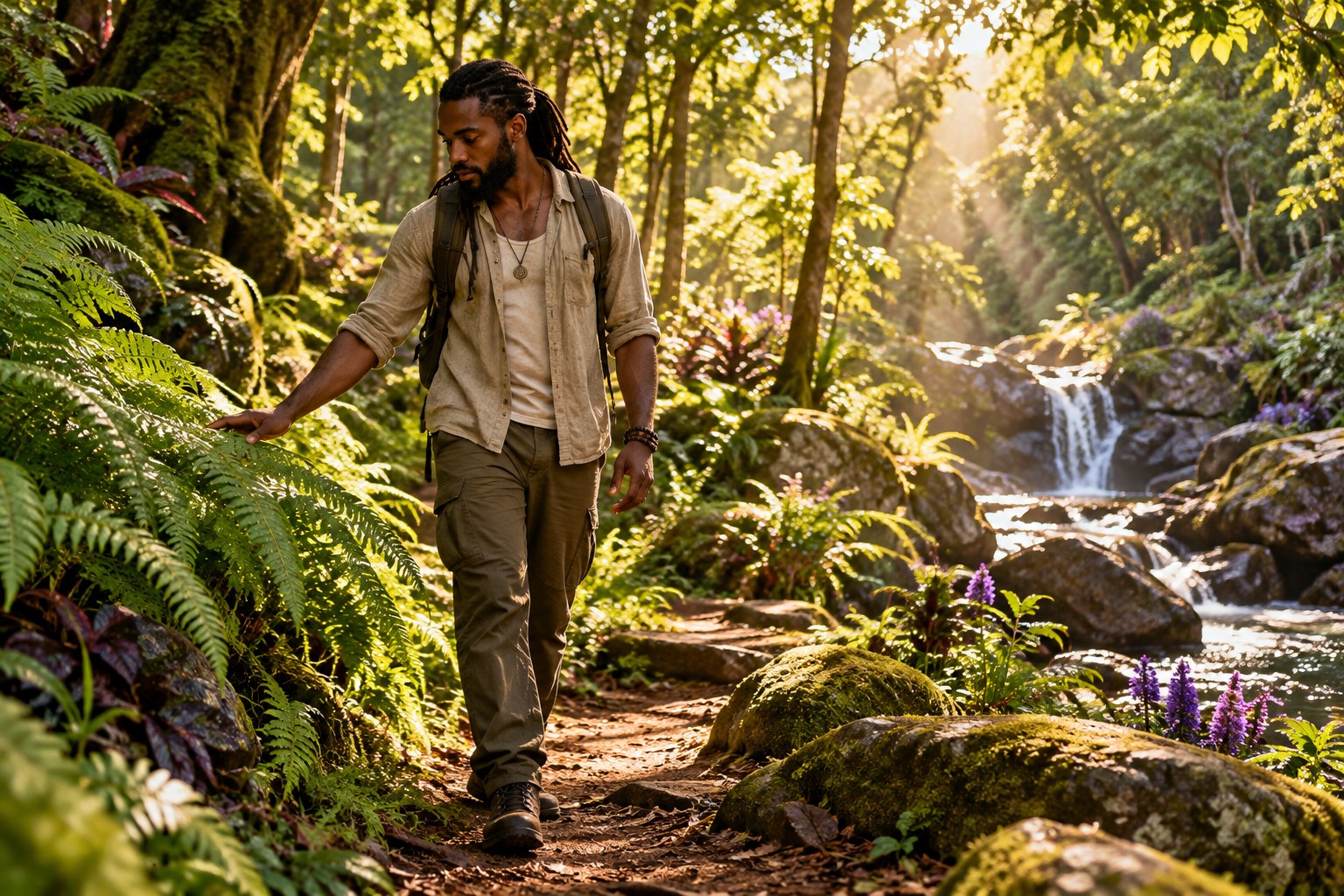
Connecting with nature can begin with noticing your surroundings. You do not need to travel to a remote location or turn every outdoor activity into a demanding routine.
A nearby tree, a view from a window or a safe local path can provide a place to observe and learn.
Choose What Is Accessible
Consider mobility, weather, safety and the time available. An outdoor walk may suit one day; a seated observation may suit another.
Use an option that fits your circumstances. There is no need to compare a brief local visit with someone else’s landscape photographs or retreat experience.
Respect access rules and avoid unfamiliar areas where you cannot move safely.
Observe One Detail
Choose something small: changes in leaves, the movement of light or a sound you can distinguish.
Describe what you notice before explaining it. You might see a plant changing through the season without yet knowing its name.
That gap can become a learning question rather than a reason to invent an answer.
Explore without Disturbing
Look up the species or setting through a suitable local source. Consider how the place is cared for and which activities are permitted.
Avoid collecting plants, approaching wildlife or assuming that a wild food is safe because you recognize a picture online.
Observation can be meaningful without removing anything from the environment.
Keep Health Claims in Proportion
Research investigates nature-based activities in particular populations and settings. One randomized study examined mindful nature walking in university students.[1] Its existence does not mean every outdoor activity treats a health condition or produces the same outcome.
You can enjoy being outdoors without attaching a medical promise to the experience.
Personal meaning and scientific evidence can both be discussed while remaining distinct.
Try a Small Observation Project
Return to the same accessible view or place several times. Record the date and one detail you noticed.
You might compare changes in weather or learn to recognize a plant. Do not record other people’s private activities or precise locations they have not chosen to share.
The project gives curiosity a continuing focus.
On Kemetic App, discuss what you observed, how you checked it and what you would like to learn next. A conversation about your surroundings can connect everyday experience with careful education.
You do not need an extraordinary explanation for an ordinary moment to deserve attention.
Continue Learning
Explore the Conscious Living learning collection for related teachings. For a deeper learning option, review Embarking on a Plant-Based Journey: Transitioning to a Vegan Lifestyle Course and its curriculum.
You can also read Living in Alignment: Your Authentic Path.
For optional practical reading, review the How to Become Plant-Based: Step-by-Step Guide product details. Assess dietary information against reliable guidance and your individual needs.
Sources and Further Reading
These links support the factual context or offer further study. The reflection exercises and examples in this article are original educational suggestions.