

Air Pollution: The Invisible Threat That Is Slowly Changing Our Health
Every single breath you take keeps you alive but what if the air you’re breathing is quietly damaging your body?
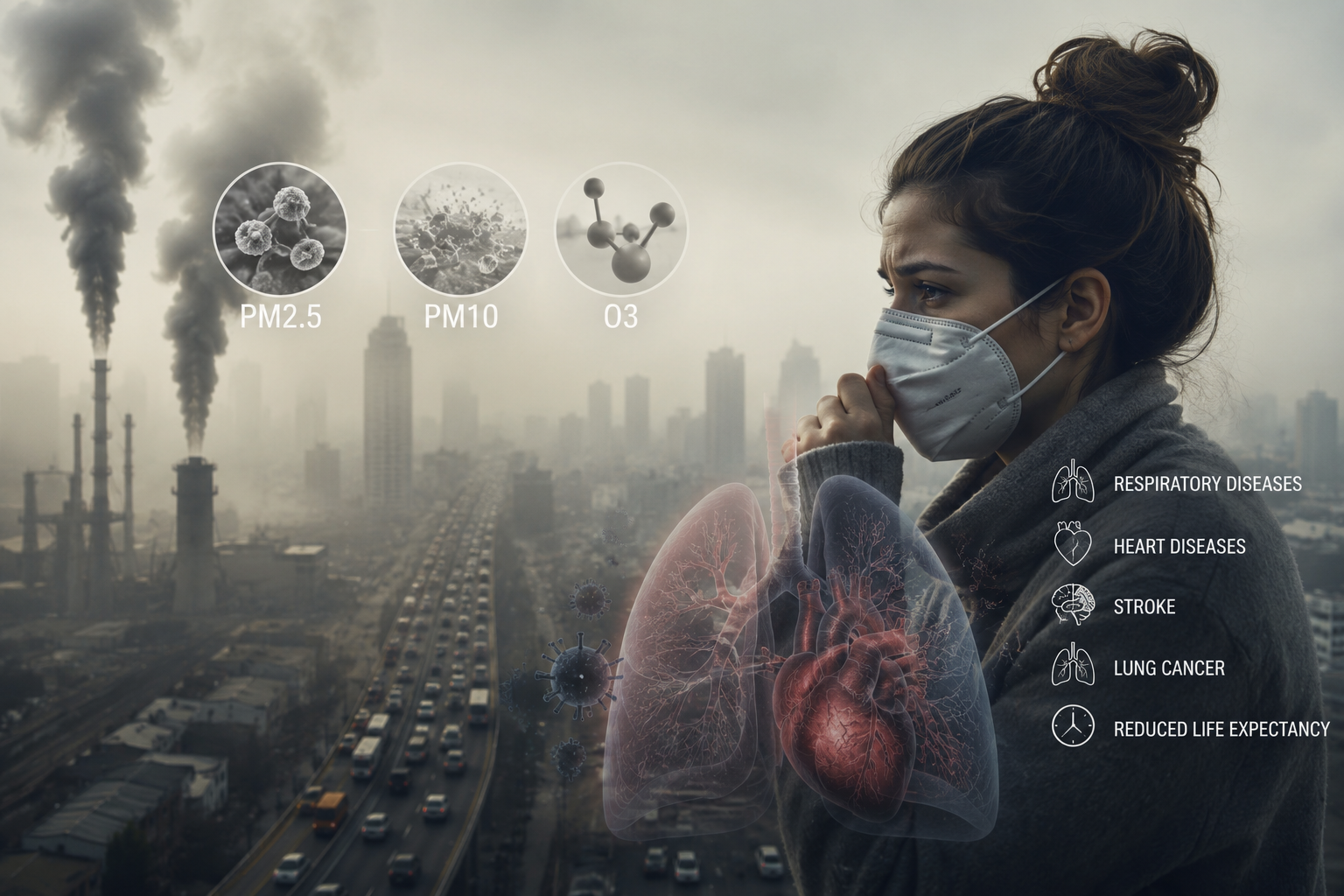
Unlike contaminated water or spoiled food, air pollution is invisible most of the time. We rarely think about it until we see smog hanging over a city or smell smoke in the air. Yet scientists now consider air pollution one of the greatest environmental health risks on Earth, contributing to millions of premature deaths every year and increasing the risk of chronic disease across nearly every organ system. According to the World Health Organization, air pollution is linked to around 7 million premature deaths annually worldwide. Fine particulate pollution (PM2.5), nitrogen dioxide, ozone, wildfire smoke, industrial emissions, and traffic pollution have become part of daily life for billions of people. (arXiv)
The Air We Breathe Has Changed
Modern cities contain a complex mixture of pollutants produced by vehicles, factories, power plants, construction, agriculture, and even household products. Tiny particles known as PM2.5 are especially concerning because they are approximately thirty times smaller than the width of a human hair. These microscopic particles can travel deep into the lungs, cross into the bloodstream, and reach nearly every organ in the body.
Researchers have found associations between long-term exposure to polluted air and increased risks of:
- Heart attacks
- Stroke
- High blood pressure
- Asthma
- Chronic obstructive pulmonary disease (COPD)
- Lung cancer
- Diabetes
- Dementia
- Pregnancy complications
- Reduced immune function
Scientists are also investigating how long-term exposure may influence cognitive decline, inflammation, and mental well-being. While many factors contribute to disease, improving air quality remains one of the most effective public health interventions available. (arXiv)
Why Air Pollution Is Becoming More Dangerous
Several trends are making the situation worse.
Urban populations continue to grow, increasing traffic congestion and industrial activity. Wildfires are becoming larger and more frequent in many parts of the world, releasing enormous amounts of smoke and microscopic particles into the atmosphere. Climate change also contributes to longer periods of stagnant air, allowing pollution to accumulate over cities.
Even people who spend most of their time indoors are not fully protected. Outdoor pollutants enter homes through windows, doors, and ventilation systems. Indoor pollution from cooking, cleaning products, candles, fireplaces, and furniture can further reduce indoor air quality.
Studies show that indoor air can sometimes be more polluted than outdoor air depending on ventilation and household activities. (arXiv)
How Pollution Affects Your Body
When polluted air enters the lungs, your immune system responds immediately. Repeated exposure creates chronic inflammation, which places continuous stress on the cardiovascular and respiratory systems.
Common symptoms may include:
- Fatigue
- Headaches
- Dry eyes
- Sore throat
- Persistent coughing
- Shortness of breath
- Poor sleep quality
- Increased allergy symptoms
- Difficulty concentrating
Long-term exposure increases cumulative health risks, particularly for children, older adults, pregnant women, and people with asthma or heart disease. Because children breathe faster and their lungs are still developing, they are especially vulnerable to poor air quality. (arXiv)
Protecting Yourself Starts at Home
Although no single product can eliminate every pollutant, there are practical ways to reduce exposure:
- Use a high-quality HEPA air purifier sized correctly for your room.
- Replace filters on schedule.
- Ventilate your home when outdoor air quality is good.
- Keep humidity between 40% and 60%.
- Reduce indoor smoke from candles and tobacco.
- Vacuum regularly using HEPA filtration.
- Monitor local air quality during wildfire or high-smog days.
Research consistently shows that properly sized HEPA filtration systems significantly reduce airborne particulate matter indoors. (arXiv)
Top 15 Air Purifiers for Cleaner Air
⭐ Featured Kemetic App Recommendations
1. Portable Neck Mounted Air Purifier
Perfect for commuting, traveling, shopping, airports, and daily outdoor use.
https://kemetic.app/products/Portable-Neck-Mounted-Air-Purifier
2. Desktop Air Purifier with Smart Display
Ideal for offices, bedrooms, workstations, and study areas.
https://kemetic.app/products/Desktop-Air-Purifier-with-Smart-Display-USB-Mini-Air-Cleaner-for-Home-Office-Car
3. Smart Air Purifier with Negative Ions & Formaldehyde Removal
Designed for larger indoor spaces while helping reduce airborne particles and household odors.
https://kemetic.app/products/Smart-Air-Purifier-with-Negative-Ions-Formaldehyde-Removal
4. 5500mL Portable Dehumidifier & Air Purifier
Combines humidity control with cleaner indoor air, making it excellent for damp rooms.
https://kemetic.app/products/5500mL-Portable-Dehumidifier-Air-Purifier
Expert Recommended Air Purifiers
5. Levoit Core Mini
https://www.amazon.com/LEVOIT-Purifiers-Fragrance-Core-Mini/dp/B09LMF648R
6. PuroAir HEPA Air Purifier
https://www.amazon.com/PuroAir-Air-Purifier-Bedroom-Allergens/dp/B0998FWTHP
7. Blueair Blue Pure 311i Max
One of the highest-rated all-around air purifiers for bedrooms and living rooms. (TechRadar)
8. Coway AP-1512HH Airmega Mighty
Excellent value with strong CADR performance and True HEPA filtration. (HVAC Base)
9. Winix 5500-2
Great for smoke, pets, and everyday household pollutants. (Product Rankers)
10. Levoit Vital 200S
Popular for allergies and larger bedrooms. (Reddit)
11. Blueair Blue Pure 211i Max
Ideal for large open living spaces. (TechRadar)
12. Dyson Purifier Big+Quiet Formaldehyde
Premium option for large homes with advanced sensing technology. (TechRadar)
13. IQAir HealthPro Plus
Medical-grade filtration trusted in highly polluted environments. (Reddit)
14. Medify MA-25
Compact True HEPA purifier suitable for apartments and offices. (Reddit)
15. Honeywell HPA300
Powerful filtration for large rooms and allergy sufferers. (YouTube)
Final Thoughts
The quality of the air you breathe every day has a direct influence on your long-term health. While we cannot control outdoor pollution, we can make meaningful improvements inside our homes and workplaces. Investing in cleaner indoor air is an investment in your lungs, heart, brain, sleep, and overall well-being.
If you’re looking for an affordable way to start improving your indoor environment today, explore the featured air purifiers above and choose one that fits your room size and lifestyle.
Your lungs never take a day off give them cleaner air to breathe.
Have you noticed worsening allergies, poor sleep, headaches, or breathing issues during periods of poor air quality? Share your experience in the comments below. Your story could help someone else recognize the importance of protecting the air they breathe.