
✦ Sacred reading•Vibeswithdia
Pre-Colonial Meaning: Hair as Language and Spirit
Before colonization, hair was communication and spirituality.
Language: In West, Central, and Southern African societies, hairstyles signaled age, marital status, ethnicity, rank, mourning, celebration, and readiness for war. A middle part meant alignment of thoughts. A braid meant unity of mind and heart. Loose hair meant safety and freedom. Hair worn up meant convictions and beliefs.
Spirit: Hair was seen as an extension of thoughts and spirit.
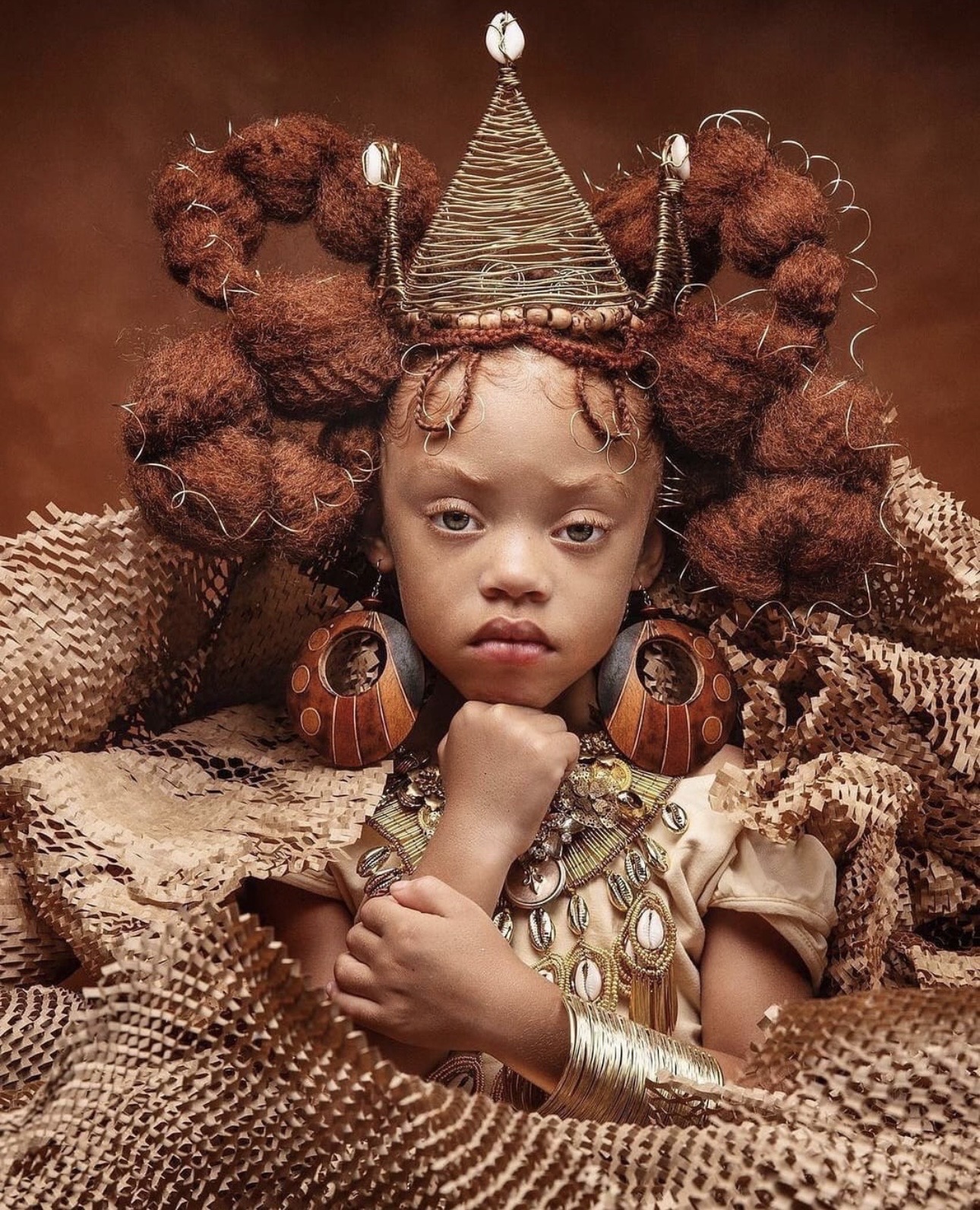
Hair is considered an extension of thoughts and spirit. It is believed to be an antenna to strengthen intuition and gain higher awareness.
Ritual: Hair care was communal. Braiding, oiling, and adorning were acts between mothers, daughters, and community members. Hair was sometimes kept or offered in rituals because it was believed to carry personal energy.
Colonization, Slavery, and the Invention of “Bad Hair”
Colonization and the transatlantic slave trade disrupted these meanings violently.
Erasure: Enslaved Africans had their heads shaved as a tool of dehumanization and to break cultural ties.
The rise of “Good Hair”: By the 1940s in the US, straightened hair became a requirement for survival in white-dominated spaces.
In the 1940s ‘Good Hair’ became a requirement for many black Americans to attain employment, admittance in certain schools and social groups.
@marvaloushair
Chemical alteration: Relaxers, hot combs, and straightening became survival tools. Many Black women describe childhood trauma from relaxers applied without consent.
Your hair is beautiful and will never be the same.
A mother to her daughter after discovering a relaxer had been applied without consent
The Spiritual and Emotional Journey of Reclamation
The shift back to natural hair is often called “the hair journey.” It’s emotional, spiritual, and political.
From shame to acceptance: Many describe being teased for “big, puffy manes” as kids, and later choosing to embrace natural texture.
I realized that natural hair was my key to accepting and defining my cultural identity.
Hair as memory: Choosing natural styles is reclaiming something that was forcibly altered.
Spiritual growth: Hair growth mirrors inner growth.
Hair grows like spirit grows. Slow, unapologetic, and it can’t be rushed.
Ritual care: Washing, deep conditioning, oiling, and braiding become meditative practices and intergenerational teaching.
Hair Discrimination Today
Hair discrimination didn’t end. It changed form.
Systemic impact: Policies that prohibit afros, braids, bantu knots, and locs have been used to remove Black kids from classrooms and Black adults from the workplace.
Hair Discrimination is rooted in systemic racism, helping preserve white spaces. Hair and grooming policies that prohibit natural hairstyles like afros, braids, bantu knots, and locs have been used to justify the removal of Black kids from classrooms and Black adults from the workplace.
@greeksinformed
Response: Movements like the CROWN Act push to make hair discrimination illegal.
> Black hair is beautiful. Black hair is cultural. Black hair belongs.
@greeksinformed
Culture, Identity, and Expression
Black hair culture is vast and specific. It’s not a monolith.
Styles: Afros, locs, twists, braids, bantu knots, cornrows, fades, silk presses, wigs, weaves. Each has cultural roots and modern meaning.
Community: Black hair care is a billion-dollar industry built by Black entrepreneurs. Salons and barbershops are community hubs.
Global diaspora: Black people in the US, UK, Caribbean, Brazil, South Africa, and Europe all have distinct but connected relationships to hair.
Gender: While often centered on Black women, Black men’s hair fades, locs, twists, afros also carries cultural and spiritual meaning.
Misconceptions to Clear Up
“Black magic”: Hair appears in folklore about magic worldwide, but the idea that it’s inherently tied to “black magic” is a misconception. In actual spiritual practice, intention and energy matter more than the material.
“One way to be Black”: There is no single “right” way to wear Black hair. Some wear locs for spiritual reasons, some for practicality. Some relax, some wear wigs, some go natural. All are valid.
“It’s just hair”: For many, it’s not. It’s identity, history, and healing.
Modern Reclamation and Education
Black creators are leading the reclamation through knowledge sharing.
HER CROWN. BEGIN TO UNDERSTAND YOUR HAIR. LEARN HOW TO GROW INCHES IN 2 MONTHS. DISCOVER THE KEY PRODUCTS YOU NEED TO BE USING! NO HYPE, JUST RESULTS!
@BlackHairCrown
The focus is on scalp health, moisture retention, protective styling, and rejecting harmful ingredients. Calling hair a “crown” reframes it from something to manage to something sacred and valuable.
What This Means Practically
If you’re writing, speaking, or learning about this:
Center Black voices: Use first-person accounts. Don’t speak for the community.
Acknowledge complexity: Hair can be joy, pain, pride, and struggle at once.
Respect the ritual: Combing, braiding, and oiling are often acts of care and mindfulness.
Avoid exoticizing: Treat spiritual aspects as lived and real, not aesthetic trend material.
Understand the politics: You can’t separate hair from the history of discrimination and reclamation.
Closing Thought
Black hair is a record of survival, resistance, and memory. It holds what was taken, what was hidden, and what was remembered. To wear it freely is to say: I am not asking for permission to exist. I already belong here.