
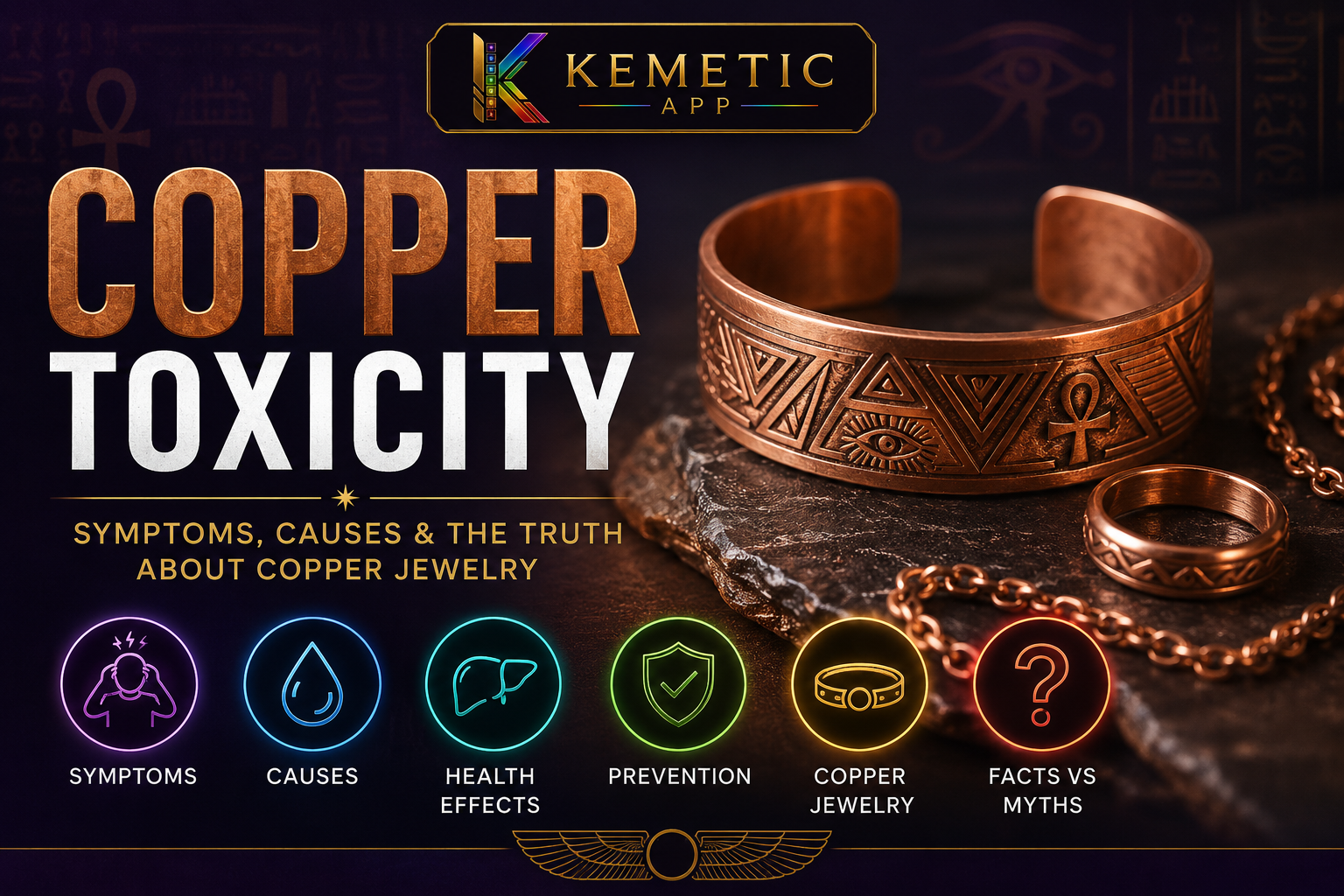
Copper Toxicity: Symptoms, Causes, and the Truth About Copper Jewelry
Copper has been used by humanity for thousands of years. Ancient civilizations used copper for tools, ornaments, healing practices, and even spiritual rituals. Today, copper can be found in supplements, plumbing systems, cookware, electronics, and jewelry. But with increasing discussions about heavy metals and health, many people are asking an important question:
Can copper become toxic, and can wearing copper jewelry cause copper toxicity?
Let’s explore the science behind copper toxicity, its symptoms, and whether your favorite copper bracelet or pendant is something to worry about.
What Is Copper?
Copper is an essential trace mineral that the human body needs to survive. It plays an important role in:
- Energy production
- Iron absorption
- Formation of connective tissue
- Brain function
- Nervous system health
- Immune system support
- Production of red blood cells
Without copper, the body cannot function properly. However, just like many nutrients, too little can cause problems, and too much can also become harmful.
What Is Copper Toxicity?
Copper toxicity occurs when excessive amounts of copper accumulate in the body faster than they can be removed.
The liver is responsible for regulating copper levels. When copper intake becomes too high, or when the body has difficulty eliminating copper, it can begin accumulating in tissues and organs.
This excess copper may contribute to oxidative stress, inflammation, and damage to various body systems.
Common Symptoms of Copper Toxicity
Symptoms can vary depending on the severity and duration of exposure.
Some of the most commonly reported symptoms include:
Physical Symptoms
- Nausea
- Vomiting
- Stomach pain
- Diarrhea
- Metallic taste in the mouth
- Headaches
- Fatigue
- Muscle weakness
- Joint pain
Neurological Symptoms
- Brain fog
- Difficulty concentrating
- Memory issues
- Anxiety
- Mood swings
- Irritability
- Depression-like symptoms
Severe Copper Toxicity
In rare and serious cases, excessive copper accumulation may lead to:
- Liver damage
- Kidney damage
- Neurological disorders
- Severe digestive distress
- Organ dysfunction
One well-known genetic condition associated with copper accumulation is Wilson’s Disease, a rare disorder where the body cannot properly eliminate excess copper.
What Causes Copper Toxicity?
Copper toxicity is generally not caused by normal dietary intake.
Potential causes include:
1. Excessive Supplement Use
Taking large amounts of copper supplements without medical supervision can increase copper levels over time.
2. Contaminated Drinking Water
Older plumbing systems containing copper pipes may release excessive copper into drinking water, especially when water sits in pipes for long periods.
3. Occupational Exposure
People working in mining, metal processing, or industrial environments may experience higher levels of copper exposure.
4. Genetic Disorders
Conditions such as Wilson’s Disease can cause dangerous copper accumulation even without excessive intake.
Can Copper Jewelry Cause Copper Toxicity?
This is where many misconceptions exist.
For the vast majority of people, wearing copper jewelry does not cause copper toxicity.
Copper bracelets, rings, ankhs, pendants, and necklaces primarily sit on the surface of the skin. While tiny amounts of copper ions may interact with sweat and skin oils, the amount absorbed is generally considered extremely small.
Many people notice a green discoloration on their skin after wearing copper jewelry. This often leads to concerns that copper is entering the body in dangerous amounts.
In reality, the green coloration is usually caused by a harmless reaction between copper, sweat, and oxygen. It is similar to how copper statues develop a green patina over time.
The green mark is not evidence of copper poisoning.
Who Should Be More Careful?
Although copper jewelry is generally safe, certain individuals may wish to exercise caution:
- People diagnosed with Wilson’s Disease
- Individuals with known copper metabolism disorders
- People experiencing unexplained heavy metal imbalances under medical care
- Individuals with skin sensitivities or allergies to metal alloys mixed with copper
For most healthy individuals, wearing copper jewelry poses little to no risk of copper toxicity.
The Bottom Line
Copper is an essential mineral that the body needs for many important functions. Like many nutrients, problems typically arise when levels become excessively high.
True copper toxicity is usually associated with excessive supplementation, contaminated water, occupational exposure, or genetic conditions not with wearing copper jewelry.
If you wear a copper bracelet, pendant, ring, or necklace and notice a green mark on your skin, it is generally a normal chemical reaction rather than a sign of poisoning.
As with any health concern, individuals experiencing symptoms they believe may be related to copper exposure should consult a qualified healthcare professional and consider appropriate testing.
Copper has been part of human civilization for thousands of years. Understanding the difference between healthy exposure and genuine toxicity helps separate fact from fear and allows people to make informed decisions about the products they use every day.